I like few things more than writing posts that cause consternation. A recent gem was on my confusion over debit cards and who can forget my assault on the irrational fear of identity theft. So why not combine the two themes?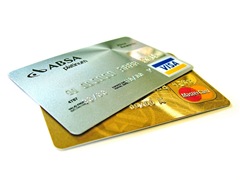
Consumerism Commentary has a nice post today on writing "Check ID" in the little strip on the back of your credit card where you are supposed to sign it. Turns out that this is a relatively common practice and that it is against Visa and MasterCard’s rules. I guess I’m not really surprised at either of these facts.
Why would a person write "Check ID" on a card? I can only assume that it is an attempt to deter a potential thief from using the card if stolen. Does anybody really think this would work? How often do cashiers actually look at the back of credit and debit cards? And then there are all the situations, from the self-checkout line to Amazon.com, that there is no cashier.
Read more »
This time last week I created one of my more unique posts. A commenter suggested that if I was in search of a topic I could write about what I thought of the "ballooning national debt." I usually try to keep closer to the personal  finance theme than that, but a request is a request. Gotta keep the readers happy.
The first thing to say is that anybody who confidently predicts any particular result from borrowing so much money is full of it. Nobody really knows what the long term effects are or what will happen next. We can speculate on it, and some prognostications may be more reasonable than others, but ultimately these are all just educated guesses.
With that disclaimer out of the way, let’s start with the big picture. Below is a chart of the US Federal Debt as a percentage of GDP. I got the data from the useful site usgovernmentspending.com.
Read more »
 This is the fourth in a series inspired by a toy at CNNMoney. Previous installments covered housing payments, emergency funds, and asset allocation.
Today’s topic really ought to be a lay-up. The tool asks "How much of your portfolio is invested in your employer’s stock?" Obviously a trick question. The correct answer is so clearly zero, barring special circumstances or incentives.
Alas, no.
In a bear market, it’s tough to find a safe haven – a lot of the stocks in your portfolio will be sinking too. But don’t compound the risk by holding too much in any one stock. Best to keep it below 10%.
This bit of psuedo-wisdom assumes and implies so much that is wrong that I hardly know where to begin.
Read more »
I know you’re thinking that Halloween has already passed and that I should have a different name for the October frugal round-up. But I wanted to remind everybody that now is the best time to purchase next year’s costume and  candy. Of course, if you have kids you can just set aside what they gathered this year trick-or-treating to give out next year.
It was a good month in the frugalosphere. Pragmatic Environmentalism pointed out that an IUD is the most cost effective of the non-abstinence methods of contraception. And Not Made of Money shared a tip for saving money on tailgate parties: hold them in your backyard to save on game tickets and parking.
Provident Planning had an important post Do It Yourself: Why Your Time Is Not Worth As Much As You Think. The author doesn’t quite say it, but the idea is that if you have time to read blogs you’ve got time to knit your own Swiiffer pads. It’s really just economics. If there is uncompensated leisure time in your day, then the marginal value of your time must be zero. You can’t argue with math.
Read more »
There is a movement amongst earnest policy wonks that might be called Nanny State Light. It’s a compromise position between full-on centrally planned we-know-what’s-best-for-you  control and you’re-on-your-own-kid libertarianism.
The idea is that instead of making people do the right thing or hoping that they do what’s best on their own, you give them a little nudge and hint in the right direction. This is, I am told, the topic of a clever and popular book, Nudge, which I haven’t yet gotten around to reading. (But I bought a copy a few weeks ago. That’s something, isn’t it?)
The latest scheme along these lines to hit the media is in today’s Wall Street Journal. Apparently, all we need to do to get people to save more money is to send them a text message reminding them to save more money.
Read more »

 Credit Cards, Identity Theft | Frank Curmudgeon |
  November 11, 2009 12:59 pm |
  Comments (737)


 Subscribe