I like television. I don’t love it. Outside of baseball season I’m not a daily watcher. But it’s a nice thing to have in the house. I even think of it as a relatively cheap form of entertainment. Much cheaper, for example, than its closest analogue, going to the movies.
Apparently, I was wrong. Turns out, each hour of TV watched costs me $4 in increased spending. This from Juliet Schor, currently a Boston College sociologist:
"Television viewing results in an upscaling of desire. And that in turn leads people to buy." Her study found that every additional hour of TV viewing per week boosts spending by roughly $200 a year.
(This from Money Magazine at CNNMoney.com via Consciously Frugal via Fiscal Fizzle via ABDPBT. The opportunity to run a fourth generation link was not the only reason I picked this topic, BTW.)
Read more »
The start of a new year is a great time to pause, consider the big picture, and predict the future. So it’s time for me to update a chart I first ran a while back on house prices.

This is adopted from Robert Shiller’s work. He chained together a collection of house price indexes covering different periods, ending with the Case-Shiller Index Composite from 1987 onwards, and then adjusted for inflation.
Read more »
This is the first post of the new decade. I can’t be sure, but I think that the recent two digit change in the Great Odometer has been a little underplayed this time around, relative to the buzz from, say, 1990.
(Fussbudgets who insist that decades start with years that end in 1 instead of 0 need to stop taking themselves so seriously. Yes, the conventional definition  is not entirely logical. Does it also bother you that fire alarms go "off" when they operate?)
Part of the under-buzz may be due to the fact that we never really got around to naming the decade that just ended. In fact, a large portion of what media coverage the decade got focused on this oversight. I have no helpful suggestions. Personally, I will always think of the 2000-09 period as the Really Fast Decade. Seriously, it feels like it lasted ten months, at most.
For investors and savers, one obvious nominee is The Lost Decade. My main objection to this is that the name is already taken, referring to the 1990s in Japan, where two generations of postwar economic expansion came to a sudden and bewildering halt on or about January 1, 1990. Compared to that, our last ten years wasn’t really all that lost. The Misplaced Decade?
Read more »
By far, the most read item this year on Bad Money Advice was Swoopo: Entertaining Yes, Shopping No. It’s the closest I’ve ever gotten to a post really going viral, accounting for about 4% of all page views on this site. No  doubt it was the first thing many of you ever read here.
So I don’t need to recap what it says. But I will remind you all that I called Swoopo a sort of "commercial performance art in which it is demonstrated just how dumb we really are." But dumb isn’t quite the right word. Irrational is better.
And that is today’s year-in-review theme, that we are all nuts. Not that there is anything wrong with that. It’s just that we aren’t nearly as logical as we think we are.
Back in March I posted on a wonderful new concept discovered by two professors: saver’s remorse. The gist of it is that it is possible to regret saving instead of spending, just as you could regret the reverse. In a better world that would have been an absurdly mundane finding, but in our world it is pretty radical.
Read more »
Continuing my review of the year via a review of this blog that I started yesterday, today the topic is the interrelated themes of credit cards and identity theft.
It has been quite a year for credit cards. How bad, and just how flat out weird, things had gotten was made apparent back in February, when I posted about American Express paying a bounty of $300 to certain customers to just go 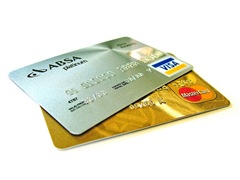 away and stop being customers. As I said at the time, this can’t possibly make big-picture business sense, although it might have been a plausible reaction to some perverse incentives from Wall Street.
Sadly, my scheme to seek out other companies that might pay me not to do business with them failed miserably.
By June things had gotten even worse for credit card companies. Or maybe the mainstream media just discovered how bad it was and started reporting on it. The Times had a story about how card companies had done everything but start printing "or best offer" after your balance on the monthly bill. I had a post on that, which also pointed out that everybody hated the companies anyway.
Read more »
 Much cheaper, for example, than its closest analogue, going to the movies.
 Economics, PF Blogs | Frank Curmudgeon |
  January 6, 2010 12:59 pm |
  Comments (680)


 Subscribe