As readers of this blog probably know, Get Rich Slowly is one of the most important and widely read blogs in the personal finance space. Wise Bread ranks it #8. It has more than 81,000 subscribers and a Google PageRank of 5. (That’s good, trust me.)
Early yesterday morning it posted a guest post from CJ at WiseMoneyMatters entitled “Why You Shouldn’t Keep a Mortgage Just for the Tax Deduction.” It is not, to say the least, a work of great insight. Filled with breathless explanations of the painfully obvious, it contains such gems as an explanation that a tax deduction reduces your taxable income not the taxes you pay. And it makes some remarkably unfounded generalizations, such as that the reader is unlikely to itemize deductions in the absence of mortgage interest.
But what made the post worth discussing here is something that it lacked, or at least lacked by the time I read it yesterday evening. Apparently, as originally posted the piece contained an “offending section” that betrayed a fundamental lack of understanding of how income taxes work, specifically the difference between marginal and average tax rates.
Last Wednesday brought us details of the administration’s plan to help homeowners hurt by the housing and credit crises. In the days that followed, we got a tidal wave of commentary from the mainstream media and blogosphere.
For those of you able to block the whole thing out, I’ll recap. The plan is really two separate schemes, the Home Affordable Refinance program and the Home Affordable Modification program. (Congrats to the Treasury for avoiding calling them together the Home Affordable Refinance and Modification program, whose unfortunate acronym, HARM, would have been fodder for clowns like me. They also get points for being so Orwellian with a straight face. The avowed goal of the Home Affordable programs is to support house prices, making them less affordable.)
The refinance program is relatively simple. If you a) owe less than $729,750 b) have a mortgage owned by Fannie Mae or Freddie Mac c) have a loan to value ratio of between 80% and 105% and d) are otherwise creditworthy, Fannie/Freddie will allow you to refinance at current rates. In other words, you get a pass on not having enough equity in the house, which is not that huge a concession given that you already owe the money to Fannie/Freddie.
Reaction to this half of the Grand Scheme can be described as largely polite. The Baglady did pointedly argue that it is a non-event, as Fannie/Freddie have been looking the other way on equity levels for a while, performing “streamlined” refinances that skip the tedious appraisal step. But most blogs (e.g. No Credit Needed and Gather Little by Little) and news accounts (Wall Street Journal and NY Daily News) just passed along the plan outline without comment.
It’s been a while since I could stay up past 11:30 and longer since I wanted to, but I came across this and thought I would share.
I have a feeling that in the future I will be saying many non-nice things about Timothy Geithner. I’d like to apologize in advance. His is a very hard job and I am sure that if I met him in person I would find him intelligent and charming. Too bad he’s so utterly clueless.
It seems that when journalists can’t think of anything else to say about the latest slaughter on Wall Street they point out that the stock market is now back to where it was X years ago. It’s not a meaningless comparison.
On Friday the S&P 500 closed at 683.38, up 0.12% over the close the day before. Prior to Thursday, the last time the S&P closed at that level was September 20, 1996. Old guys like me think that was just yesterday, but it was actually rather a while ago. Clinton (the husband) was running for reelection. The internet stock craze was just beginning. Steve Jobs hadn’t returned to Apple yet and Amazon and eBay were both still privately held.
Does it make sense that the 500 largest companies in America are now worth what they were 12 1/2 years ago?
Of course, simple price level is not the only way to judge what stocks cost. Consider price earnings ratio (PE), what you pay per dollar of corporate profits. What the S&P 500 companies will probably earn in 2009 turns out to be roughly comparable to what they earned in 1996. But that’s not apples to apples, because in 1996 the economy was humming along in a boom and today the economy is in recession. (We hope.) To normalize the cyclicality out and get a handle on the gross earnings power of the S&P 500, Yale’s Robert Shiller has popularized PE10, which is the ratio of price to the average earnings over the previous ten years. Plug in Friday’s close to his spreadsheet and you get a value of 11.8. The last time we saw 11.8 was in January 1986.
All advice in this blog is guaranteed to be worth at least what you paid for it, or double your money back. All persons dealing with matters of personal finance are advised to gather information from blogs, books, radio and TV, consult with professionals, discuss the matter with anybody who will listen, and then make their own decision. Because it’s their money.
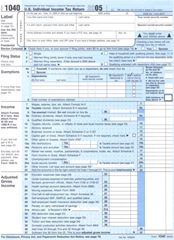 the Tax Deduction.” It is not, to say the least, a work of great insight. Filled with breathless explanations of the painfully obvious, it contains such gems as an explanation that a tax deduction reduces your taxable income not the taxes you pay. And it makes some remarkably unfounded generalizations, such as that the reader is unlikely to itemize deductions in the absence of mortgage interest.
 PF Blogs, Taxes | Frank Curmudgeon |
  March 11, 2009 11:36 am |
  Comments (156)

 Subscribe